




Did you know that (almost) every major WordPress release is named in honor of a jazz musician? Why? Or why jazz and not another musical genre?
Jazz is pleasant to listen to, but not so easy to be understood. It’s the same with WordPress: nice on the surface and a little complex (just a little) when you go deep at the core level.
On wordpress.org/about/history, you’ll read that WordPress core developers share a love of jazz music and that’s the main reason for naming all major releases in honor of jazz musicians they personally admire.
Matt Mullenweg, the co-founder of WordPress, studied jazz and it’s said that it has a “personal formula”, which is music + freedom, exactly what you need to perform in tech industry (structure or math and creativity).
There are other tech companies who have code names out of the ordinary (to be extraordinary). Let me list a few:
- Android: dessert names until 2019 (from Android 1.5 – Cupcake – to Android 9.0 – Pie).
- Apple MacOS: used big cats publicly, while internal development was named after wines (10.0 – 10.8).
- Debian: each version has a name from the Toy Story cartoon characters – each stable version because that unstable version has the name Sid – Sid is the bad boy, known for destroying toys through pyrotechnics.
- IDF operations: follow naming conventions designed to evoke strength, defensive intent, or specific thematic references to the conflict’s locations or goals – frequently utilize biblical, historical, and traditional Hebrew concepts.
This world is pretty simple, isn’t it? Some of us complicate it.
How Powerful Is WordPress Today?
WordPress was created as a blogging tool, but today (for me is April 17, 2026) is more than that: WordPress can be used to create powerful websites and online stores (e-commerce) alongside its sibling – WooCommerce.
Should I give some statistics? I think you’ll appreciate. How many? I’ll list 4!
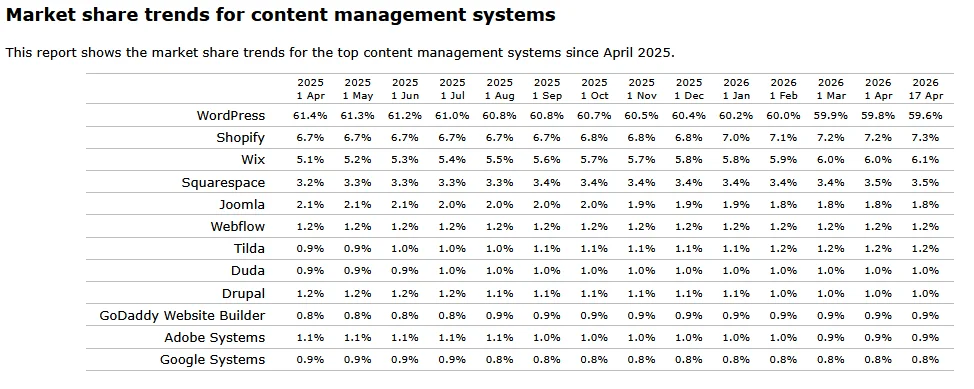
- As of April 2026, WordPress holds a 59.6% CMS market share:
- WordPress has more than 60.000 free plugins: wordpress.org/plugins
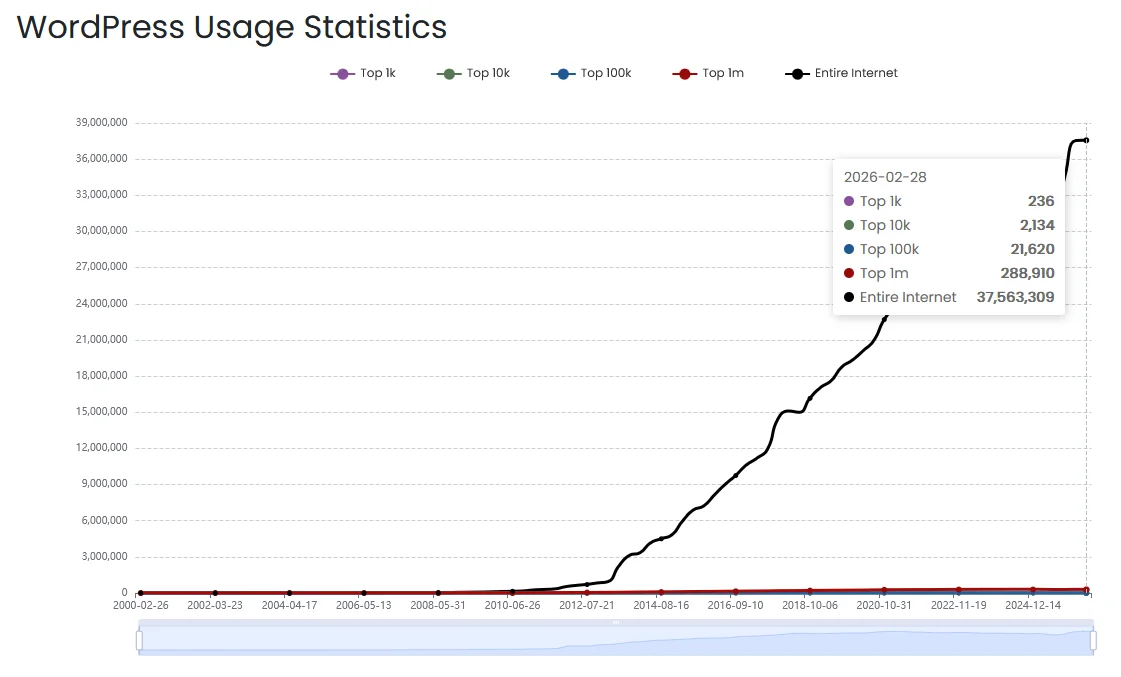
- According to trends.builtwith.com, there are at least 37.000.000 WordPress websites across the internet.
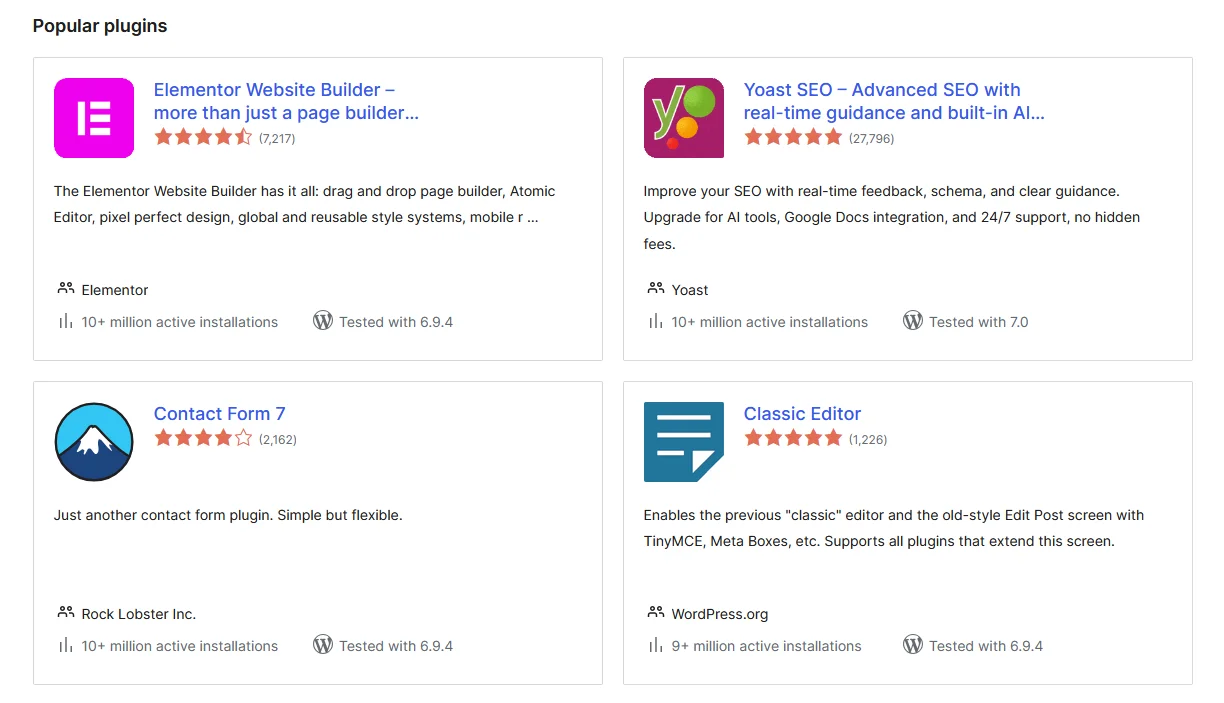
- Top 4 WordPress plugins: Elementor, Yoast SEO, Contact Form 7 (all three with 10+ million active installations), Classic Editor (9+ million active installations).
I must point out that (almost all of) these statistics are decreasing year by year. Should it be a cause for concern? It is already… WordPress Core Team works hard to bring improvements upon improvements.
For me, WordPress has always been a solution for blogging and for developing websites for my clients, even those who need an e-commerce. WooCommerce is a plugin or an extension that adds the DNA shopping (products, carts, and checkouts), and together with WordPress is extremely powerful.
Globally, there are more than 3.000.000 live websites using WooCommerce. Do you think this number is huge? I think you heard before about Shopify. There are more than 7.000.000 websites using Shopify. More than double.
Some statistics indicate that there are over 4 to 6 million live websites powered by WooCommerce globally. I don’t know, I can’t find a clear answer.
With that being said, I think WordPress is still competitive and has a lot of chances to be in the next 10 years. Nobody wants to waste time and money switching from one technology to another.
WordPress Milestones
The first milestone was produced in Matt Mullenweg’s life, who didn’t like any existing online blogging software except b2 and decided to create a new platform.
This new platform was launched on May 27, 2003.
WordPress 1.0 has the ability to have multiple categories per post, comment moderation, and some tools to import from the leading blogging software, Movable Type. This version had no WYSIWYG (What You See Is What You Get) editor, plugins or themes.
On May 22, 2004, WordPress version 1.2 introduced the plugin architecture. Each installation of WordPress had the Hello Dolly plugin – an example plugin to show users how to format and create a plugin file. Plugins remains one of the most groundbreaking WordPress features.
In version 2.0, WordPress added user roles and introduced static pages. This major improvement was a pivotal moment toward WordPress becoming a complete website solution. In this version was added the first WYSIWYG editor and the Akismet anti-spam plugin.
The third version of WordPress in 2010 was a serious upgrade. Why? Because it introduced headers, navigation menus, custom backgrounds, custom taxonomies, post types, short links, and a whole lot more. In this major version, the platform could now display pages that fit on any device or screen size (desktop, laptop, tablet, mobile).
In 2013, WordPress established its dominance in the Content Management System (CMS) market. So, in just 10 years, Matt Mullenweg’s idea has successfully spread globally.
You may say that 10 years is a long time and you don’t have the patience to build or to stabilize a business. That’s your perspective and your right to think as you wish. There are too many examples that prove the opposite.
During WordPress version 4.0 (with all those minor updates), the REST API infrastructure was merged into the core code. At that time, WordPress could be connected to other websites and applications like Google Maps.
Gutenberg editor has rise as part of the version 5.0 and fundamentally changed the game.
Version 6 focused on UI and UX performance. With this version, with Gutenberg, it was possible to design your entire website using the same block system. Version 5.0 was about how you write, while version 6.0 was about how you design.
Gutenberg is a serious competitor to top page builders like Elementor and Divi. I still prefer Elementor, but I don’t neglect Gutenberg.
Nowadays, WordPress is working on version 7.0, which will include Real-Time Collaboration (RTC) and some improvements based on AI (#NothingWithoutAI)
Open Source As Pure Jazz
What is jazz? For me, jazz is a synonym for improvisation. For others, jazz means “the sky is the limit”.
Jazz is a controversial term. Nobody really knows how it emerged, although some are sure they know.
I have a jazz dictionary from 1976, and on page 147, the only definition that is worth mentioning states that jazz was an onomatopoeia of encouragement for the musicians, who were cheered on with “jazz it”.
Miles Davis said that his music wasn’t jazz, but “social music”. WordPress version 1.0 was named after Miles Davis. The first version, 0.7, is not named after a musician.
You can think of jazz as a writer’s pen: imagination is brought to life as you write or sing.
Writing is also something specific for programmers. Even if you have a clear task, you may encounter some challenges that require creativity to solve them. Jazz is about creativity, and the same applies to programming.
What about open source? Why are open source projects considered to be pure jazz? To summarize in one word, I think it all comes down to improvisation.
There’s nothing wrong with saying that a jazz band is like a team of programmers. Both of them bring to the public (open source) their knowledge and start to create something. Whether it is relevant or not is up to others to judge.
From the beginning, WordPress was available completely free under the GPL license. The main advantage of this freedom is that everyone who wanted to create a blog or a website, had WordPress as their first option. That’s how I started creating websites.
Maybe open source projects (like WordPress) are not as pure as jazz music, but then again, jazz music is not as pure as an open source project. Both have impurities or a specific flow that includes mistakes.
It’s not easy to work on an open source project together with hundreds or thousands of programmers. It is similarly challenging to play jazz with other enthusiasts.
Everyone wants to leave their mark on what they do. This isn’t necessarily bad, but as the famous proverb goes “You can’t manage what you can’t measure” – otherwise, it could lead to total failure.
As an analogy, I like the following part from Psalm 45:1, which says: “my tongue is the pen of a ready writer”. This is the pinnacle of a successful improvisation. That divine creativity is where “the sky is the limit”.
WordPress Jazz Versioning Name List
I’ll list all WordPress versions along with the musicians they were named after:
- 7.0 🎵 Louis Armstrong 🗓 May 20, 2026
- 6.9 🎵 Gene Harris 🗓 December 2, 2025
- 6.8 🎵 Cecil Taylor 🗓 April 15, 2025
- 6.7 🎵 Sonny Rollins 🗓 November 12, 2024
- 6.6 🎵 Tommy Dorsey 🗓 July 16, 2024
- 6.5 🎵 Regina Carter 🗓 April 2, 2024
- 6.4 🎵 Shirley Horn 🗓 November 7, 2023
- 6.3 🎵 Lionel Hampton 🗓 August 8, 2023
- 6.2 🎵 Eric Dolphy 🗓 March 29, 2023
- 6.1 🎵 Mikhail Alperin 🗓 November 1, 2022
- 6.0 🎵 Arturo O’Farrill 🗓 May 24, 2022
- 5.9 🎵 Joséphine Baker 🗓 January 25, 2022
- 5.8 🎵 Art Tatum 🗓 July 20, 2021
- 5.7 🎵 Esperanza Spalding 🗓 March 9, 2021
- 5.6 🎵 Nina Simone 🗓 December 8, 2020
- 5.5 🎵 Billy Eckstine 🗓 August 11, 2020
- 5.4 🎵 Nat Adderley 🗓 March 31, 2020
- 5.3 🎵 Rahsaan Roland Kirk 🗓 November 12, 2019
- 5.2 🎵 Jaco Pastorious 🗓 May 7, 2019
- 5.1 🎵 Betty Carter 🗓 February 21, 2019
- 5.0 🎵 Bebo Valdés 🗓 December 6, 2018
- 4.9 🎵 Billy Tipton 🗓 November 15, 2017
- 4.8 🎵 Bill Evans 🗓 June 8, 2017
- 4.7 🎵 Sarah Vaughan 🗓 December 6, 2016
- 4.6 🎵 Pepper Adams 🗓 August 16, 2016
- 4.5 🎵 Coleman Hawkins 🗓 April 12, 2016
- 4.4 🎵 Clifford Brown 🗓 December 8, 2015
- 4.3 🎵 Billie Holiday 🗓 August 18, 2015
- 4.2 🎵 Bud Powell 🗓 April 23, 2015
- 4.1 🎵 Dinah Washington 🗓 December 18, 2014
- 4.0 🎵 Benny Goodman 🗓 September 4, 2014
- 3.9 🎵 Jimmy Smith 🗓 April 16, 2014
- 3.8 🎵 Charlie Parker 🗓 December 12, 2013
- 3.7 🎵 Count Basie 🗓 October 24, 2013
- 3.6 🎵 Oscar Peterson 🗓 August 1, 2013
- 3.5 🎵 Elvin Jones 🗓 December 11, 2012
- 3.4 🎵 Grant Green 🗓 June 13, 2012
- 3.3 🎵 Sonny Stitt 🗓 December 12, 2011
- 3.2 🎵 George Gershwin 🗓 July 4, 2011
- 3.1 🎵 Django Reinhardt 🗓 February 23, 2011
- 3.0 🎵 Thelonious Monk 🗓 June 17, 2010
- 2.9 🎵 Carmen McRae 🗓 December 18, 2009
- 2.8 🎵 Chet Baker 🗓 June 11, 2009
- 2.7 🎵 John Coltrane 🗓 December 10, 2008
- 2.6 🎵 McCoy Tyner 🗓 July 15, 2008
- 2.5 🎵 Michael Brecker 🗓 March 29, 2008
- 2.3 🎵 Dexter Gordon 🗓 September 24, 2007
- 2.2 🎵 Stan Getz 🗓 May 16, 2007
- 2.1 🎵 Ella Fitzgerald 🗓 January 22, 2007
- 2.0 🎵 Duke Ellington 🗓 December 31, 2005
- 1.5 🎵 Billy Strayhorn 🗓 February 17, 2005
- 1.2 🎵 Charles Mingus 🗓 May 22, 2004
- 1.0 🎵 Miles Davis 🗓 January 3, 2004
Learn & Grow
How much did you like this article? The main idea is a jazzy one: learn to understand, then you will inevitably grow personally and professionally.
If you need a professional WordPress website or have one, but need maintenance, please let me know. Thank you!
“Good is good when it’s well done.”
✍ Horja Robert Emanuel
Digital Ecosystems Orchestrator