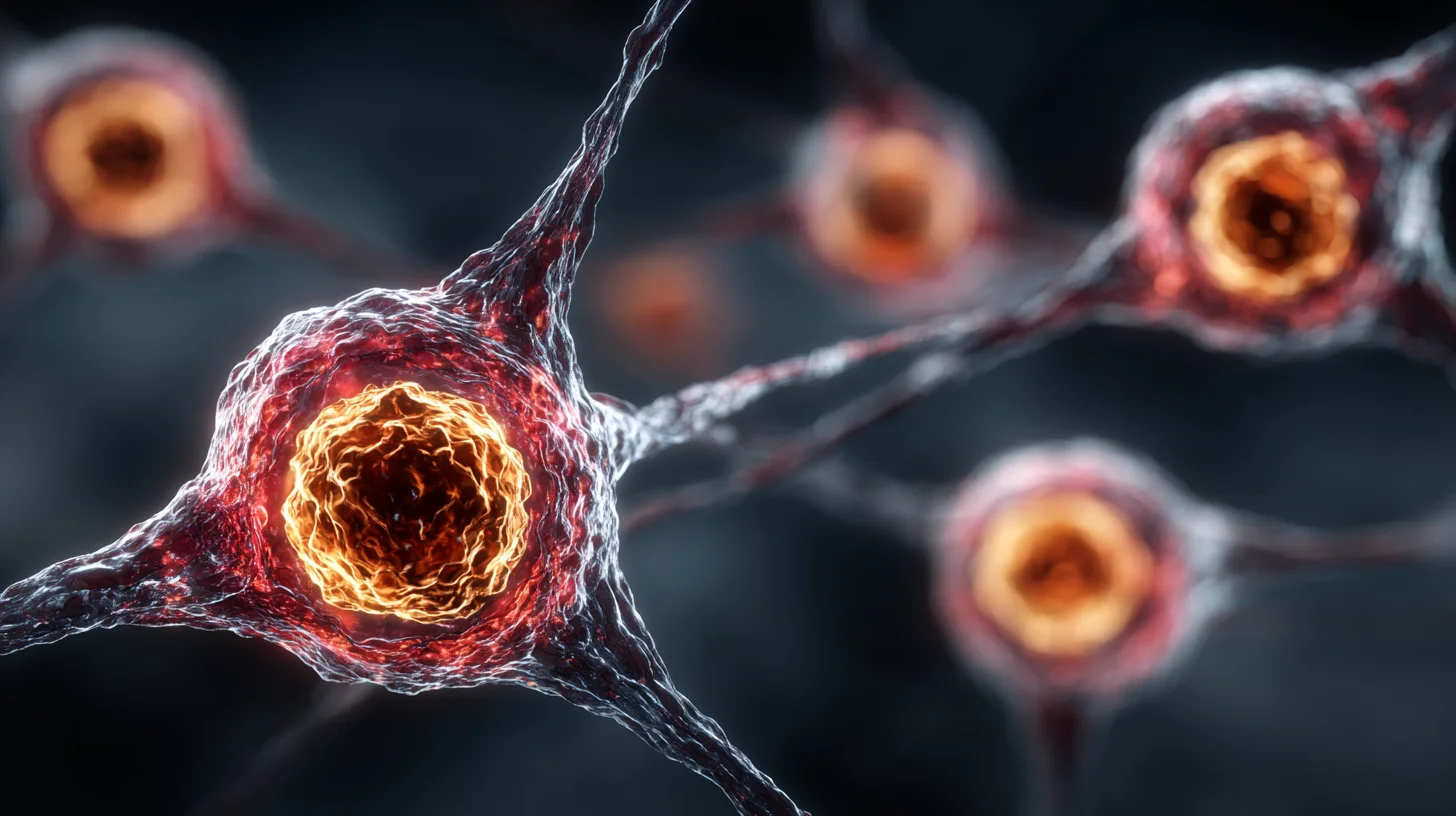



“What fires together, wires together” is a cornerstone of neuroscience, used to describe how our brains adapt or learn and adapt.
This concept was first introduced by Donald Hebb in 1949, in his book, “The Organization of Behavior”. Donald Hebb was a Canadian psychologist, member of both the Canadian Psychological Association (CPA) and the American Psychological Association (APA).
Is good to know that Hebb received an honorary doctorate from 15 universities. He was very appreciate for his contributions in neuropsychology.
In his book, “The Organization of Behavior”, Donald Hebb wrote the following:
When an axon of cell A is near enough to excite cell B and repeatedly or persistently takes part in firing it, some growth process or metabolic change takes place in one or both cells such that A’s efficiency, as one of the cells firing B, is increased.”
Later, this postulate was transformed in a catchy rhyme by Carla Shatz (American neurobiologist): “Cells that fire together, wire together” or “Neurons that fire together, wire together”.
What is a postulate? I think it’s worth mentioning that a postulate (or an axiom) is a statement that is assumed to be true without needing proof. A postulate has a starting assumption, while a theory is a broad explanation supported by a huge body of evidence.
In our case, the title is a postulate not just a fact or an observation. Why? Let me explain in simple terms:
- The premise: if learning exists, there must be a physical change in the brain.
- The postulate: the strength of the connection between two neurons increases when they are active at the same time.
- The conclusion: repeated patterns of activity create a stable memory.
A stable memory is called an engram and is activated by a learning experience, modified during storage, and reactivated to retrieve the memory.
An engram is the physical trace of a memory. Because of Hebb’s Postulate, we know a memory isn’t stored in a single memory cell. Instead, a memory is a web.
One more thing about an engram: is the proof that your memories aren’t just ideas – they are physical parts of your body. If you lose the engram (through injury or disease), the memory is physically gone. If you want to have a good memory, sleep well or well enough… Sleep helps stabilize new engrams so they aren’t lost.
That being said, an engram is like a record and that record can be strengthen when is in use – what fires together, wires together.
A Principle For Everyone
Memory is an essential part of the human life.
In neuroscience, when you recall a memory, the neurons are firing and the connections are temporarily malleable. This means that if you are in a different mood or have new information when you remember something, you can actually edit the record before it wires back down.
That’s the reason why our memories of the same event can change slightly every time we tell the story.
“What fires together, wires together” can be a principle. For whom? For everyone!
If we think about a principle as a guiding rule, everyone need the principle to learn.
Learning is a gift from God.
Someone will ask why God didn’t created us with full knowledge and why we need to learn… That’s why: because we receive gifts after gifts in the process of learning.
It would have been very boring if we knew everything about anything. What would be the meaning of life? Of course, that of praising God, but that’s all? We praise God when we are and do what we were created to be and do.
We were created in the image and likeness of God and that’s why we have within us a thirst of knowledge to learn and do new things.
Learning it’s like training and memory is like a muscle. We need to train our muscles, right? Otherwise, the muscles will atrophy.
Use It Or Lose It
In neuroscience, we have the opposite rule: “Cells that fire out of sync, lose their link.”
We forget skills or information when we stop using a specific neural pathway. It can be natural or by default.
Maybe you’ll say that you forget everything you learned in high-school. It’s a natural behavior to forget something you didn’t used in the past 10 years.
You need to know that the brain is an expensive organ to run and it consumes about 20% of your total energy. Perhaps, that’s the reason you’ll feel exhausted after learning or after mental work.
So, to save power, the brain refuses to keep “wires” active if they aren’t being used. It’s a biological principle, the brain is not against you, but it does this to protect you (your energy).
Imagine the brain as an organ that is constantly being reshaped. If you don’t use wisely your time and energy to learn or to recap what you want, the brain itself will make a choice for you depending on different context.
Have you forgotten how to ride a bike? I guess the answer will be “No”. Why not, even you haven’t ride a bike in 20 years? Because those neural pathways are still there and that skill is a mastered one.
“Use it or lose it” is a call to practice, and that practice is the path for maintenance.
Practice Is Your Brain’s Maintenance
Repetition keeps neural “highways” clear and fast.
Think about Mozart or Beethoven. How did they get so good at music? Did they have pure talent? A pure talent can’t grow without improvements and maintenance.
How about Lionel Messi and Cristiano Ronaldo? At least Ronaldo is the definition of practice… Messi seems to be from another planet, but not all the time. He is a human like you and like me. Without practice, without preparation, without dedication, without hard work, we are in the same league or at the bottom of the ocean.
When you practice, inevitably new connections are created, you accumulate experience after experience, and after a while, you’ll notice what you should improve and what you must change.
Practice is a synonym for training. A muscle must be trained. A skill must be practiced. A neural wire must be… reinforced!
Your brain is not just a high-performance machine who help you to achieve some goal. Instead, your brain gives you software updates, structural repairs and keep your body from falling apart. Resting is the best medicine for you and for me.
Did you know that during rest, the brain moves information from short-term memory to long-term memory? The long-term memory acts as an archive, organizing knowledge, experiences, and skills for future retrieval. Unlike short-term memory, which fades quickly, long-term memory is maintained through consolidation.
Learning is an art. Everyone can learn, but not everyone can master learning. It’s a hard truth to understand, isn’t it?
Learn & Grow
I believe this article helps you to think and rethink about what you do or at least, you’ll think about the reason behind your actions.
Every action has a reaction.
If you learn something, you’ll create neural paths in your brain. That’s how you become smarter. If you want to be wiser, then you have to practice.
When you practice, you strengthen those neural highways, and your level of understanding new things will be useful to you in the future.
Good bye or as it is said in the original: God be with ye!
“Good is good when it’s well done.”
✍ Horja Robert Emanuel
Digital Ecosystems Orchestrator